Water as a Source of Prosperity
The National Water Program 2026-2030, published in the DOF, opens the door to shifting water management in Mexico from recurring emergency to strategic policy. With agriculture consuming 76% of national water and 16 states in severe drought, water emerges as the cross-cutting infrastructure of development. The real challenge is not the plan or point investments, but institutional coordination across the three levels of government.
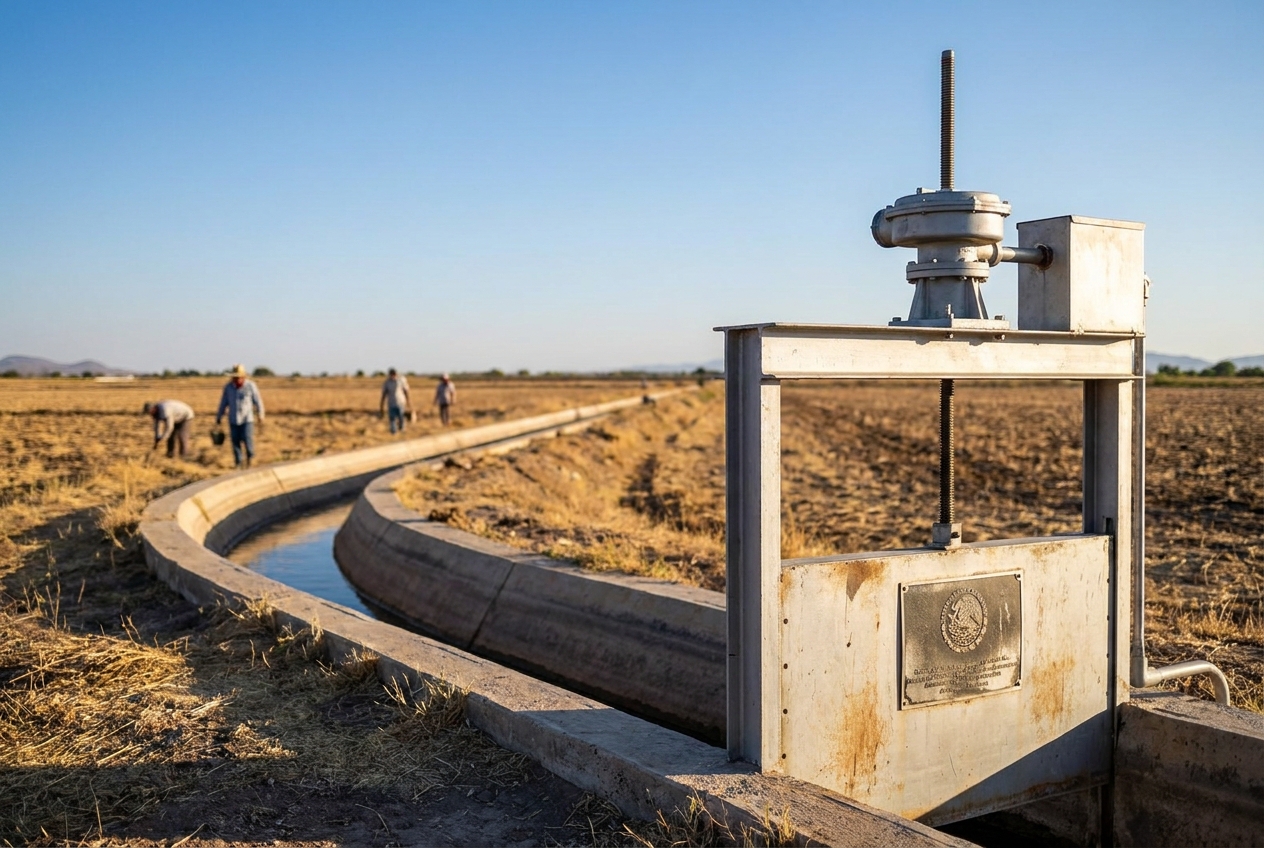
Mexico's water management has occupied the wrong place on the public agenda for decades: that of recurring emergency, not strategic policy. The National Water Program 2026-2030, recently published in the Diario Oficial de la Federación, offers an opportunity to correct that inertia. It contains 5 objectives, 20 strategies, and 75 lines of action. Whether that is sufficient depends on the quality of the institutional coordination backing it.
A resource that underpins everything else
Agriculture consumes roughly 76% of national water, according to estimates from Conagua and INEGI. Sixteen states are experiencing severe drought. At the same time, Mexico is seeking to consolidate its position as a destination for industrial investment at a moment when the reconfiguration of global supply chains offers a historic opportunity. That combination carries a direct implication: without water security, there are no functional industrial parks, no competitive cities, no food security. Water is not a sectoral input; it is the cross-cutting infrastructure of territorial development.
Israel, facing severe climatic conditions, turned scarcity into industrial policy: irrigation modernization, wastewater reuse, and basin governance coordinated across levels of government. The result was not only water efficiency, but sustained agricultural competitiveness. Mexico has river basins, institutional capacity, and a new general water law published in December 2025. It has the instruments. What it now requires is the institutional architecture to make them operate in a coordinated manner.
Coordination as a precondition
The federal government allocated 2.6 billion pesos to water infrastructure in the Valley of Mexico in April 2026. That is a concrete step. The underlying challenge, however, goes beyond point investments: it requires all three levels of government to operate with shared data, coordinated timelines, and mechanisms that prevent an irrigation project in Sonora or a treatment plant in Jalisco from becoming disconnected from the surrounding urban or industrial planning. The state's governing authority over water exists within the legal framework. Exercising it effectively is the next step.
Behind every rehabilitated dam, protected aquifer, or upgraded irrigation network lies an ethical decision about what kind of country we want to build. Water management in Mexico can become the quiet axis of shared prosperity, provided it is treated for what it is: sovereignty infrastructure, not just crisis response. The National Water Program 2026-2030 is the map. Institutional coordination is the path.