Property Tax in Mexico: How It Works and Why It Matters
What Mexico's property tax is, how it is calculated from cadastral value, and what municipalities do with the money property owners pay. A complete guide.
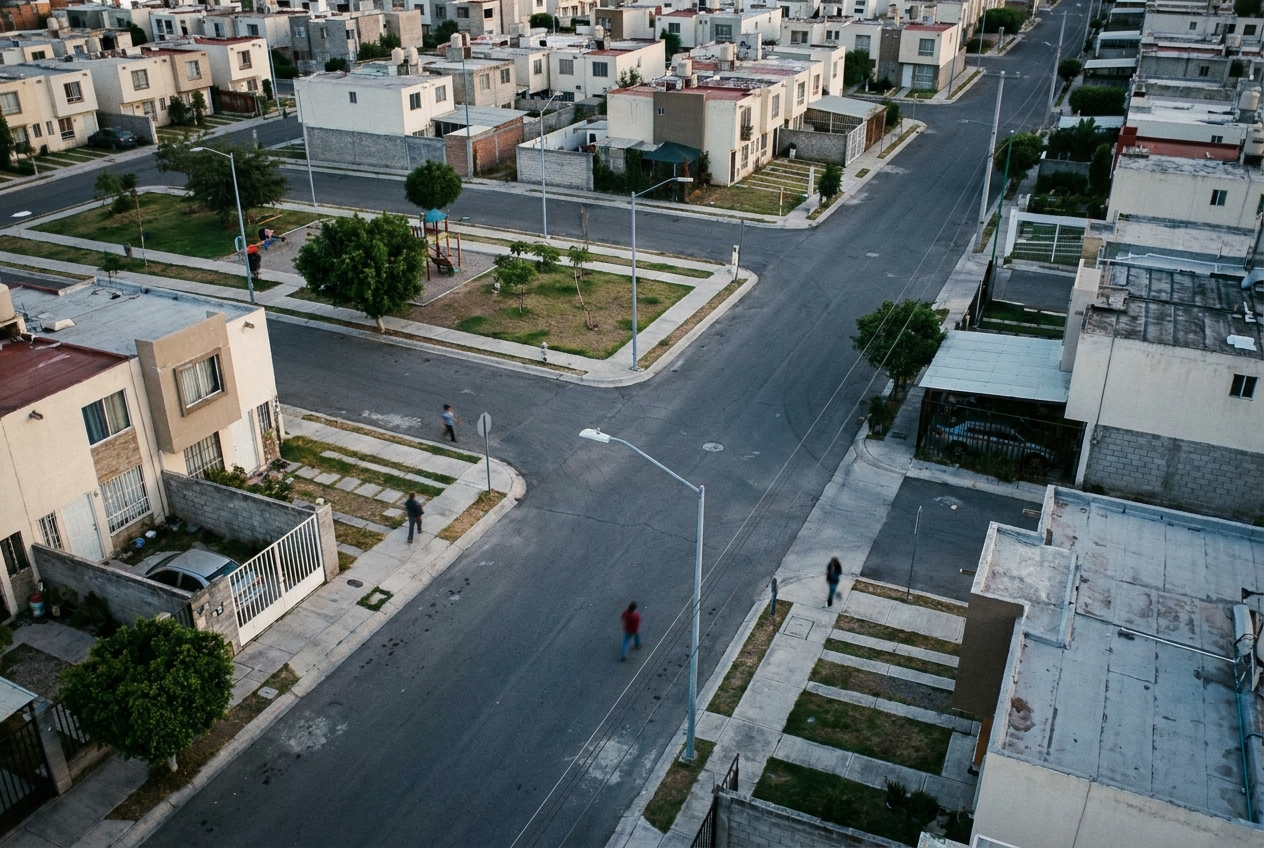
The Tax That Funds Your Street, Your Park, and Your Street Lighting
Every year at the start of January, millions of property owners in Mexico receive a payment notice that many pay almost automatically, without asking how the figure was determined or what will be done with the money. Mexico's property tax (predial) is, technically, one of the revenue sources most directly tied to the urban services we use every day: pothole repairs, street lighting, parks, and rubbish collection. Yet Mexico collects a markedly smaller share of GDP through this channel than most countries it competes with in economic development. Understanding how this tax works is not merely a fiscal education exercise; it means understanding the financial architecture of cities and the real degree of municipal autonomy.
What the Property Tax Is and Its Legal Basis
The property tax is a local levy on the ownership or possession of real estate: land, housing, commercial premises, and industrial buildings. Under the Mexican Constitution (Article 115), municipalities hold the exclusive authority to collect this tax; it is one of the few own-revenue sources that the law guarantees at the level of government closest to citizens. This makes it, in theory, an instrument of municipal fiscal autonomy rather than a federal transfer.
The tax base is the cadastral value of the property, an official estimate produced by the municipal cadastre that in principle should reflect the market value of the plot and any structures on it. A rate or schedule is applied to that value, varying by land use (residential, commercial, industrial), the zone within the municipality, and the total value of the property. The resulting amount can generally be paid in a single lump sum with an early-payment discount, or in instalments over the course of the year.
How the Property Tax Is Calculated in Three Steps
The calculation process can be summarised in three stages applied by the majority of municipal treasuries across the country:
Step 1: Determine the Cadastral Value
The municipal cadastre assigns a value to the land (based on the zone and the unit land values approved by the local council) and a value to the buildings on it (based on floor area, materials, and condition). The sum of both is the total cadastral value of the property. How to calculate the property tax in three simple steps is a practical resource that illustrates this process for homeowners with numerical examples.
Step 2: Apply the Rate or Schedule
Each municipality publishes its rate schedule annually in its Municipal Revenue Law. Residential rates are generally lower than commercial or industrial ones. In many urban municipalities, the effective rate on cadastral value ranges between 0.1% and 0.3% per year, though the ranges vary considerably across states and property value brackets.
Step 3: Apply Discounts or Surcharges
Most municipalities offer discounts for early payment (January or February), discounts for senior citizens or persons with disabilities, and surcharges for late payment. The final amount can differ considerably from the figure calculated in the previous step, depending on when and under what conditions the taxpayer pays.
Cadastral Value: The System's Weakest Link
Here lies one of the most well-documented structural problems with Mexico's property tax: cadastral values are typically far below actual market value. According to IMCO, municipal cadastres are outdated and underutilised, with many having gone unreviewed for years or even decades. A property worth five million pesos today may be registered in the cadastre at one million, meaning the owner pays property tax on one-fifth of their actual real estate wealth.
This gap between cadastral and market value reflects an identifiable institutional dynamic. Updating the cadastre means raising the property tax, which creates tension between local government and its taxpayers. The result is a cycle that perpetuates low collection: outdated values produce low taxes, which produce insufficient revenue to modernise the cadastre, which in turn goes unupdated. Breaking that cycle requires both technical capacity and institutional arrangements that separate the decision to update from the immediate electoral cycle.
What the Property Tax Is For: The Link to Urban Services
The property tax is the primary link between private property and the maintenance of the collective services that make cities liveable. Unlike VAT or income tax, which flow to the federal government and are redistributed through revenue-sharing and grants, the property tax stays with the municipality that collects it. In practice, this means it funds:
- Street lighting and road maintenance
- Solid waste collection
- Parks and public spaces
- Basic municipal administration
- Co-financing of local public works
As Property Tax in Mexico: How It Works, What It Is For, and How to Check It explains, the tax is the financial backbone of the services that make a city liveable at an everyday scale. A property owner who does not pay is not only failing a legal obligation; they are reducing the budget available for the very services they use.
Untapped Potential: The Numbers Behind the Gap
Mexico collects roughly 0.2% of GDP in property tax. By comparison, OECD countries with similar levels of urbanisation collect between 0.5% and 2% of GDP through the same channel. Mexico's Property Tax Is Underutilised, according to IMCO, which estimates that with updated cadastres and moderate rates, collections could triple without any increase in nominal rates. The core problem is not the rate; it is the undervalued tax base.
The CIEP analysis of the revenue potential of the property tax across Mexican states shows that the gap between what is collected and what could be collected varies enormously across states. Highly urbanised states with concentrated real estate value have the greatest room for absolute improvement. States with lower urban density have smaller margins, but also municipal expenditure structures that make any increase in own revenues more urgent, given their greater dependence on federal transfers.
Property Tax and Municipal Autonomy: The Link That Defines What Municipalities Can Do
A municipality that depends almost exclusively on federal and state transfers has limited room to prioritise local spending, to invest in services not covered by federal fund earmarks, or to respond to specific citizen demands. A municipality with robust own revenues can act from a position of greater decision-making capacity.
The analysis published in El Financiero on the property tax as an anchor of municipal autonomy argues that dependence on transfers conditions the local agenda: municipalities end up implementing programmes designed at another level of government instead of responding to their own territorial priorities.
The Tecnológico de Monterrey, in its analysis of seven points about Mexico's property tax, notes that low property tax collection does not reflect a low fiscal capacity in most urbanised municipalities; rather, it reflects a combination of outdated cadastres, limited investment in territorial information systems, and a low tax-compliance culture among property owners. All three factors can be addressed with technical and public-policy instruments already tested in other contexts.
The International Context: What Other Systems Do
In countries like Colombia and Brazil, cadastral reforms over the past two decades managed to close the gap between cadastral and market value through mass appraisal methodologies and periodic updates tied to real estate price indices. In Chile and Uruguay, cadastres are administered at the national level with municipal participation, which distributes the administrative and technical costs of updating and reduces the incentives to postpone it.
In the United States, the property tax operates on a logic similar to Mexico's predial but with tax bases closer to market value and rates that in many counties exceed 1% per year. The result is that local governments have a much more robust own fiscal base to fund schools, emergency services, and infrastructure without depending on transfers from other levels of government.
The lesson is not to copy any of these models directly, but to identify the institutional mechanisms that made it possible to close the cadastral gap and sustain periodic updates at manageable technical and administrative costs at the municipal scale.
How to Check and Pay the Property Tax
The process varies by municipality, but most urban municipalities now offer online consultation and payment through the municipal treasury portal or the state cadastral system. The taxpayer needs the property tax account number (shown on the previous receipt) or the property's cadastral key, which can be obtained from the municipal cadastral registry.
Early-payment discounts are typically available in January and February. Paying in that window can represent savings of between 5% and 20% on the annual amount, depending on the municipality. Some states, such as Ciudad de México, Jalisco, and Nuevo León, have relatively mature digital platforms; others require in-person processing or have systems undergoing modernisation.
Toward a Property Tax That Serves Municipalities and Citizens Better
The property tax has everything it needs to be a robust fiscal instrument: a clear constitutional foundation, a direct link between taxpayer and beneficiary, and a revenue potential that available analyses place well above what is currently captured. The path to realising that potential does not require creating a new tax or raising nominal rates indiscriminately; it requires updating cadastral values with modern methodologies, investing in accessible territorial information systems, and building the institutional mechanisms that allow updates to occur on a regular basis.
For property owners, understanding how the property tax works is the first step toward demanding that the money they pay translates into visible services in their immediate environment. For municipalities, strengthening this own-revenue source is the condition for having genuine capacity for independent action and not depending solely on earmarked transfers from other levels of government. And for the urban system as a whole, a well-designed property tax is one of the most direct mechanisms for ensuring that the value generated by real estate development flows back to the city that made it possible.
---
Fuentes:
- https://futurociudades.tec.mx/es/siete-puntos-acerca-del-impuesto-predial-en-mexico
- https://ciep.mx/el-potencial-recaudatorio-del-impuesto-predial-en-las-entidades-federativas/
- https://imco.org.mx/el-impuesto-predial-esta-desaprovechado-en-mexico/
- https://imco.org.mx/catastros-municipales-desactualizados-y-desaprovechados/
- https://www.elfinanciero.com.mx/opinion/colaborador-invitado/2025/10/27/el-predial-como-ancla-de-autonomia-el-reto-ineludible-para-los-municipios-de-mexico/
- https://blog.vinte.com.mx/predial-en-mexico-como-funciona-para-que-sirve-y-como-consultarlo
- https://www.lahaus.mx/blog/tips-financieros/pasos-faciles-calcular-predial-tu-casa
Sources
- Siete puntos acerca del impuesto predial en México
- El potencial recaudatorio del impuesto predial en las entidades federativas
- El impuesto predial está desaprovechado en México
- Catastros municipales: Desactualizados y desaprovechados
- El predial como ancla de autonomía: el reto ineludible para los municipios de México
- Predial en México: cómo funciona, para qué sirve y cómo consultarlo
- ¿Qué función tiene el impuesto predial?
- Cómo calcular el impuesto predial en tres sencillos pasos