Roads, Trains, and Planning: Infrastructure as Social Contract
The 2026-2030 Infrastructure Investment Plan commits 5.6 trillion pesos, and the Megabachetón program has already covered 37,854 km of federal highways in four months. The Mexico Infrastructure Plan describes a model where development combines visible megaprojects with consistent everyday maintenance. Germany offers a useful mirror for codifying maintenance, new railways, energy transition, and digital connectivity within a measurable institutional framework, with shared prosperity and dignity.
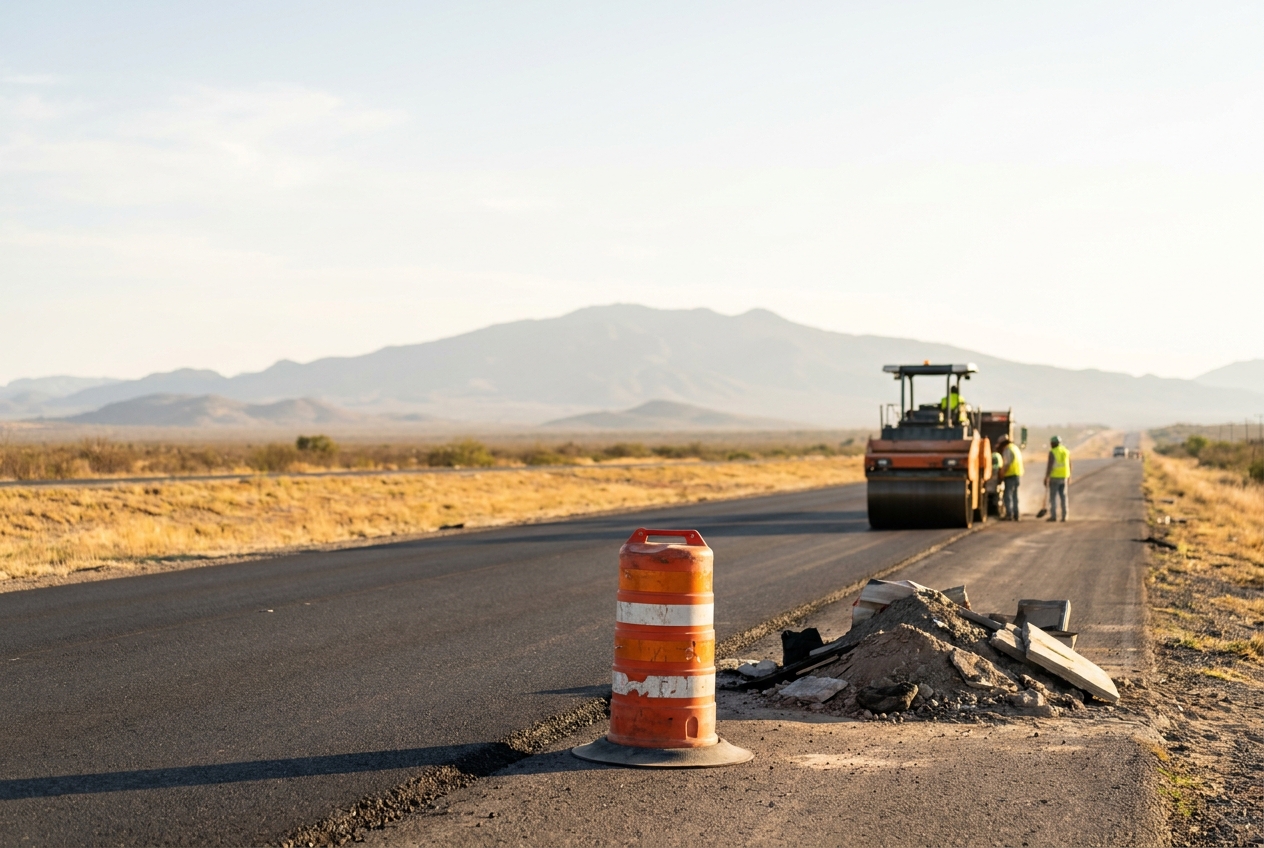
Mexico closes the first four-month period of 2026 with two complementary announcements. President Sheinbaum presented in February the Infrastructure Investment Plan for Development with Wellbeing, committing 5.6 trillion pesos through 2030 across eight strategic sectors (energy, railways, roads, ports, health, water, education, and airports). On May 10, the Ministry of Infrastructure reported that 37,854 kilometers of the federal toll-free road network had already been treated, with 962 kilometers resurfaced in four months. These figures describe a single idea: infrastructure as social contract.
Germany offers a useful reference point. In March 2025, through a constitutional amendment, it created the Special Infrastructure and Climate Neutrality Fund, a 500 billion euro, twelve-year vehicle that explicitly integrates new megaprojects with the daily maintenance of roads, bridges, railways, hospitals, and schools within a single federal framework. The German lesson is clear: a country modernizes when public planning integrates construction and maintenance into a single state policy.
The value of this fund lies in the institutional architecture that accompanies it. It required a constitutional amendment, mandates annual monitoring reports from the Federal Ministry of Finance, keeps its accounts separate from the ordinary budget, and ensures that spending is genuinely additional to pre-existing investment. That demand for transparency and fiscal discipline is what converts a budgetary decision into durable modernization policy, with a time horizon that outlasts any electoral cycle.
The Mexico Infrastructure Plan amounts to approximately 2% of GDP and combines the continuation of priority projects (Mexico-Querétaro Train, Isthmus of Tehuantepec, refineries) with a dedicated 50 billion peso road maintenance program and a target of 100,000 associated jobs. The link between megaprojects and maintenance describes a model where development is measured by territorial continuity: a truck reaching its destination without disruption, a rural road remaining passable through the agricultural season, a hospital connected to its community via safe roads.
That territorial continuity has a regional face. Maintenance of the federal toll-free network connects rural communities to municipal centers, regional markets, and health facilities, cutting the logistics times that have penalized Mexico's south and southeast for decades. The Interoceanic Train, the new lines toward Querétaro, Guadalajara, and San Luis Potosí, and the port corridors form a system in which the movement of people and goods reaches metropolises and historically disconnected regions alike. When a company in Oaxaca can export with lead times comparable to one in Nuevo León, territorial equity becomes concrete infrastructure.
The next step is conceptual. The Mexico Infrastructure Plan will reach its definitive form when it codifies maintenance, new railways, energy transition, and digital connectivity under a single measurable institutional framework, with verifiable metrics for physical progress, job creation, and regional contribution. Germany has already shown it is possible. Mexico has the opportunity to build its own path, with shared prosperity, institutional certainty, and everyday dignity as a shared horizon.
Norway offers a useful reference point. Equinor, its state energy company, operates with the financial discipline and transparency standards of any publicly listed corporation, and the country's oil revenues have fed the world's largest sovereign wealth fund for decades, now valued at around 1.7 trillion dollars. The Norwegian lesson is straightforward: state ownership of an oil company and financial discipline are compatible when a robust institutional framework and clear accountability metrics are in place.
The Norwegian model distributes responsibilities across a tripartite architecture: the Ministry of Trade manages the state's 67% stake in Equinor; the Ministry of Energy and the Norwegian Offshore Directorate oversee licenses, reserves, and technical regulation; and oil revenues are transferred to the Government Pension Fund Global, operated by the central bank as an intergenerational reserve. That separation between operator, regulator, and beneficiary prevents conflicts of interest and makes the oil company's financial discipline a prerequisite for shared prosperity.
Mexico is moving in that direction, though the numbers remain demanding. According to figures presented on May 10 in a legislative session, Pemex recorded a loss of nearly 46 billion pesos in the first quarter of 2026 and carries supplier debt approaching 375 billion pesos; CFE reported quarterly losses of 402 million pesos. These figures describe the real challenge of operational consolidation: vertical integration was a first step, and financial stabilization is the next.
The second phase of Mexico's energy sovereignty requires four coordinated moves. First, a medium-term financial plan that sequences debt repayments, reactivates exploration investment, and reduces dependence on imported natural gas. Second, a policy for professionalizing technical cadres in refineries and fields. Third, publicly verifiable metrics on productivity, costs, and regional contribution. Fourth, transparent governance of procurement decisions and the supplier chain.
Operational consolidation also has a territorial dimension. Tabasco, Campeche, Veracruz, and Tamaulipas concentrate the country's oil operations and depend structurally on Pemex's financial health for formal employment, local tax revenues, and their regional industrial fabric. CFE, for its part, sustains the electricity network in communities where public operation guarantees affordable prices and universal service. When both companies recover operational capacity, what is strengthened is territorial equity: production in the Gulf, affordable energy in the highlands, and industrial certainty in the Bajío corridor.
Mexico's energy sovereignty will be consolidated when Pemex and CFE operate as efficient, financially disciplined, and socially legitimate state enterprises. Norway has already shown it is possible. Mexico now has the opportunity to build its own path, with shared prosperity, institutional certainty, and everyday dignity as its horizon.
Frequently Asked Questions
What is the Mexico Infrastructure Investment Plan and how much does it commit?
The Infrastructure Investment Plan for Development with Wellbeing, presented by President Sheinbaum in February 2026, commits 5.6 trillion pesos through 2030 across eight strategic sectors: energy, railways, roads, ports, health, water, education, and airports.
What is the Megabachetón program?
The Megabachetón is a federal road maintenance initiative. By May 10, 2026, the Ministry of Infrastructure reported that 37,854 kilometers of the federal toll-free network had been treated, with 962 kilometers fully resurfaced in four months.
How does Germany's infrastructure fund compare to Mexico's approach?
Germany's Special Infrastructure and Climate Neutrality Fund, created via constitutional amendment in March 2025, allocates 500 billion euros over twelve years and integrates new megaprojects with routine maintenance under a single federal framework with mandatory annual reporting from the Federal Ministry of Finance.
What are Pemex's and CFE's financial challenges heading into mid-2026?
As of the first quarter of 2026, Pemex recorded a loss of nearly 46 billion pesos and carried supplier debt approaching 375 billion pesos. CFE reported quarterly losses of 402 million pesos, underscoring that vertical integration was a first step and financial stabilization remains the next.