Pemex in Its Second Phase: From Vertical Integration to Operational Results
The 2026-2030 Infrastructure Investment Plan commits 5.6 trillion pesos, and the Megabachetón has already covered 37,854 km of federal highways in four months. The Mexico Infrastructure Plan describes a model where development combines visible megaprojects with consistent everyday maintenance. Germany offers a useful mirror for codifying conservation, new rail lines, energy transition, and digital connectivity under a measurable institutional framework, with shared prosperity and everyday dignit
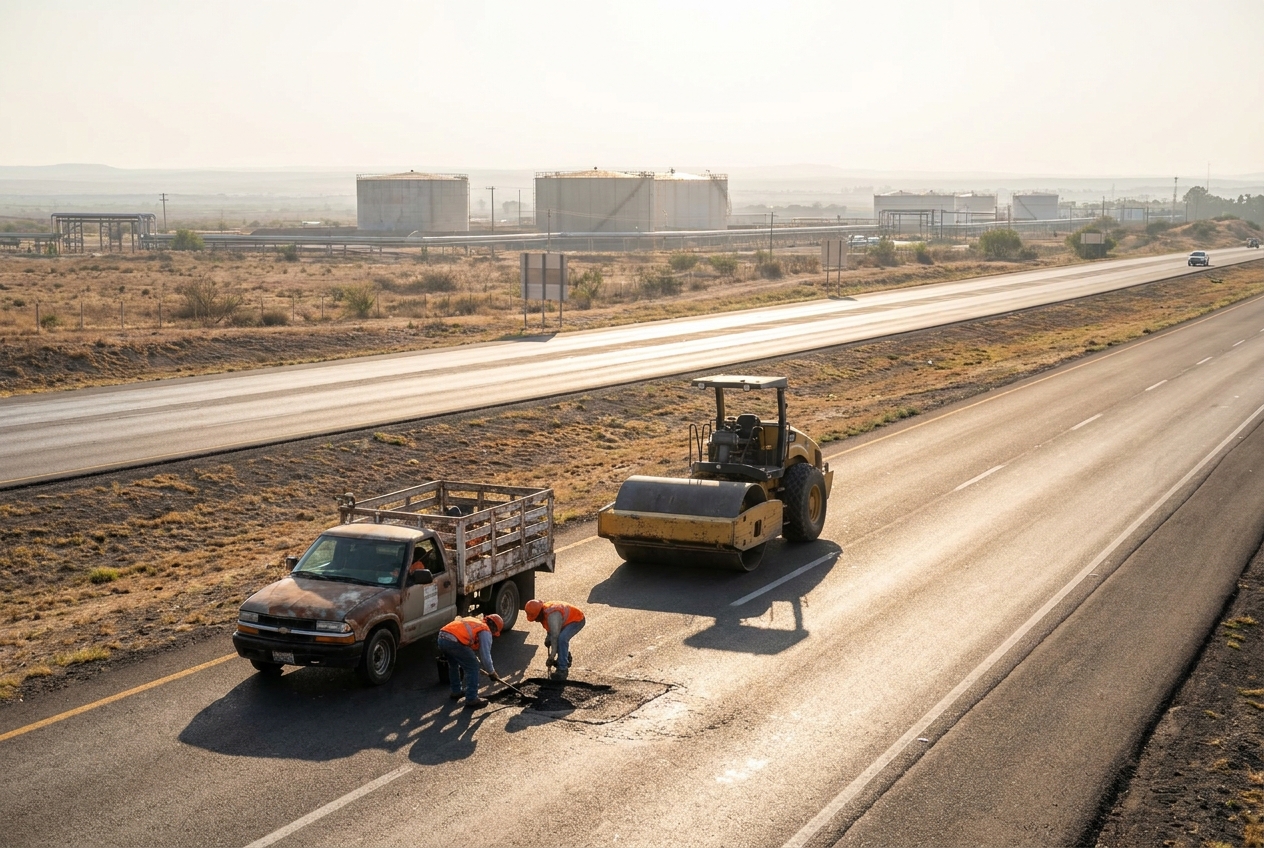
Mexico closes the first quarter of 2026 with two complementary announcements. President Sheinbaum presented in February the Infrastructure Investment Plan for Development with Wellbeing, committing 5.6 trillion pesos toward 2030 across eight strategic sectors (energy, rail, highways, ports, health, water, education, and airports). On May 10, the Infrastructure Secretariat reported that it had already covered 37,854 kilometers of the toll-free federal highway network, with 962 kilometers repaved in four months. These figures describe a single idea: infrastructure as a social contract.
Germany offers a useful reference point. In March 2025, through constitutional reform, it created the Special Patrimony for Infrastructure and Climate Neutrality, a 500-billion-euro twelve-year fund that explicitly ties together new megaprojects and the everyday maintenance of highways, bridges, rail lines, hospitals, and schools within a single federal framework. The German lesson is clear: a country modernizes when public planning integrates construction and preservation into a single state policy.
The value of this Patrimony lies in its institutional architecture. It required a constitutional amendment, mandates annual monitoring reports from the Federal Ministry of Finance, keeps its accounts separate from the ordinary budget, and requires that spending be additional to existing investment. That demand for transparency and fiscal discipline is what converts a budgetary decision into lasting modernization policy, with a horizon that extends beyond any electoral cycle.
The Mexico Infrastructure Plan amounts to approximately 2% of GDP and combines the continuation of priority projects (the Mexico-Querétaro Train, the Isthmus of Tehuantepec, refineries) with a specific 50-billion-peso road conservation program and a target of 100,000 associated jobs. The articulation between megaprojects and maintenance describes a model where development is measured by territorial continuity: a truck reaching its destination without incident, a rural road remaining passable throughout the agricultural cycle, a hospital connected to its community via safe roads.
That territorial continuity has a regional face. Maintenance of the toll-free federal network connects rural communities with municipal centers, regional markets, and health clinics, reducing the logistical delays that for decades penalized the south and southeast of the country. The Interoceanic Train, the new lines toward Querétaro, Guadalajara, and San Luis Potosí, and the port corridors integrate a system where the movement of people and goods reaches metropolises and historically disconnected regions alike. When a company in Oaxaca can export with turnaround times comparable to one in Nuevo León, territorial equity translates into concrete infrastructure.
The next step is conceptual. The Mexico Infrastructure Plan will reach its definitive form when it codifies conservation, new rail lines, energy transition, and digital connectivity under a single measurable institutional framework, with verifiable metrics for physical progress, job creation, and regional contribution. Germany has already demonstrated this is possible. Mexico has the opportunity to build its own path, with shared prosperity, institutional certainty, and everyday dignity as a common horizon.
Frequently Asked Questions
What is Mexico's Infrastructure Investment Plan 2026-2030?
Announced by President Sheinbaum in February 2026, the plan commits 5.6 trillion pesos across eight strategic sectors (energy, rail, highways, ports, health, water, education, and airports) and targets 100,000 associated jobs. It pairs flagship megaprojects with a dedicated 50-billion-peso road conservation program.
How does Germany's infrastructure fund compare to Mexico's approach?
Germany's 500-billion-euro Special Patrimony for Infrastructure and Climate Neutrality, created by constitutional reform in March 2025, integrates new construction and routine maintenance under a single federal framework with mandatory annual monitoring and off-budget accounting. It illustrates how institutional architecture, not just capital commitment, converts spending into durable modernization policy.